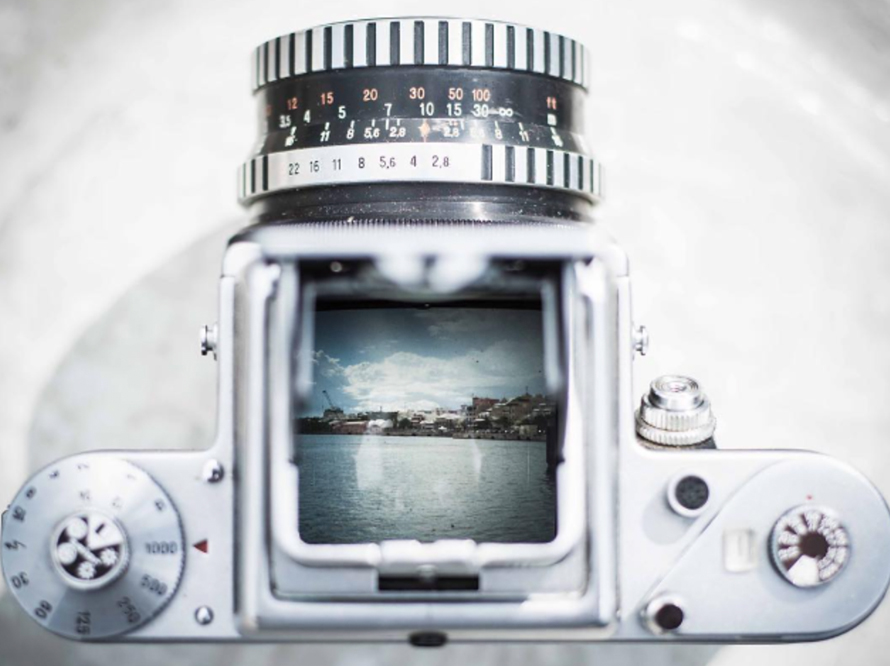
There is a reason film people talk about cameras the way they talk about instruments. The weight. The controls. The small resistance of a dial. The worn edges from years of use that fit, somehow, exactly where your thumb rests.
A film camera is a mechanical object. That’s not a small thing.
Inside a well-maintained SLR or rangefinder is a system of springs, levers, and curtains engineered to do one thing precisely: control exactly how much light reaches the film for exactly the right amount of time. The engineering is decades old in many cases. The tolerances are tight. And it all happens without a battery — or with one so modest it lasts years.
When something goes wrong with a digital camera, the diagnosis usually begins with a menu. With a film camera, it begins with listening. A sticky shutter sounds different from a light leak. You learn to read the camera through touch and sound, not just image output.
This changes the relationship between photographer and tool. You develop a kind of mechanical empathy — an awareness of the object’s condition, its quirks, its limits. Photographers who shoot film for long enough often develop strong preferences that have nothing to do with image quality and everything to do with feel. The way a certain shutter release trips. The sound a Leica makes versus a Nikon. The resistance in a lens barrel that tells you you’ve landed on the focus point.
These preferences matter because they affect shooting. A camera that feels right in your hands disappears into the process. You stop thinking about the tool and start thinking about the frame.
The best cameras aren’t the ones with the most features. They’re the ones that get out of the way. And there’s something about a simple, well-made mechanical object — a camera with a shutter speed dial and an aperture ring and nothing else — that makes getting out of the way very easy indeed.
The object between your hands is also a commitment. You carry it, maintain it, repair it when necessary. You learn its history. A lot of film cameras come with histories already attached — previous owners, previous decades, previous work. That lineage isn’t just romantic. It’s a reminder that the image-making tradition you’re participating in is longer than you are.